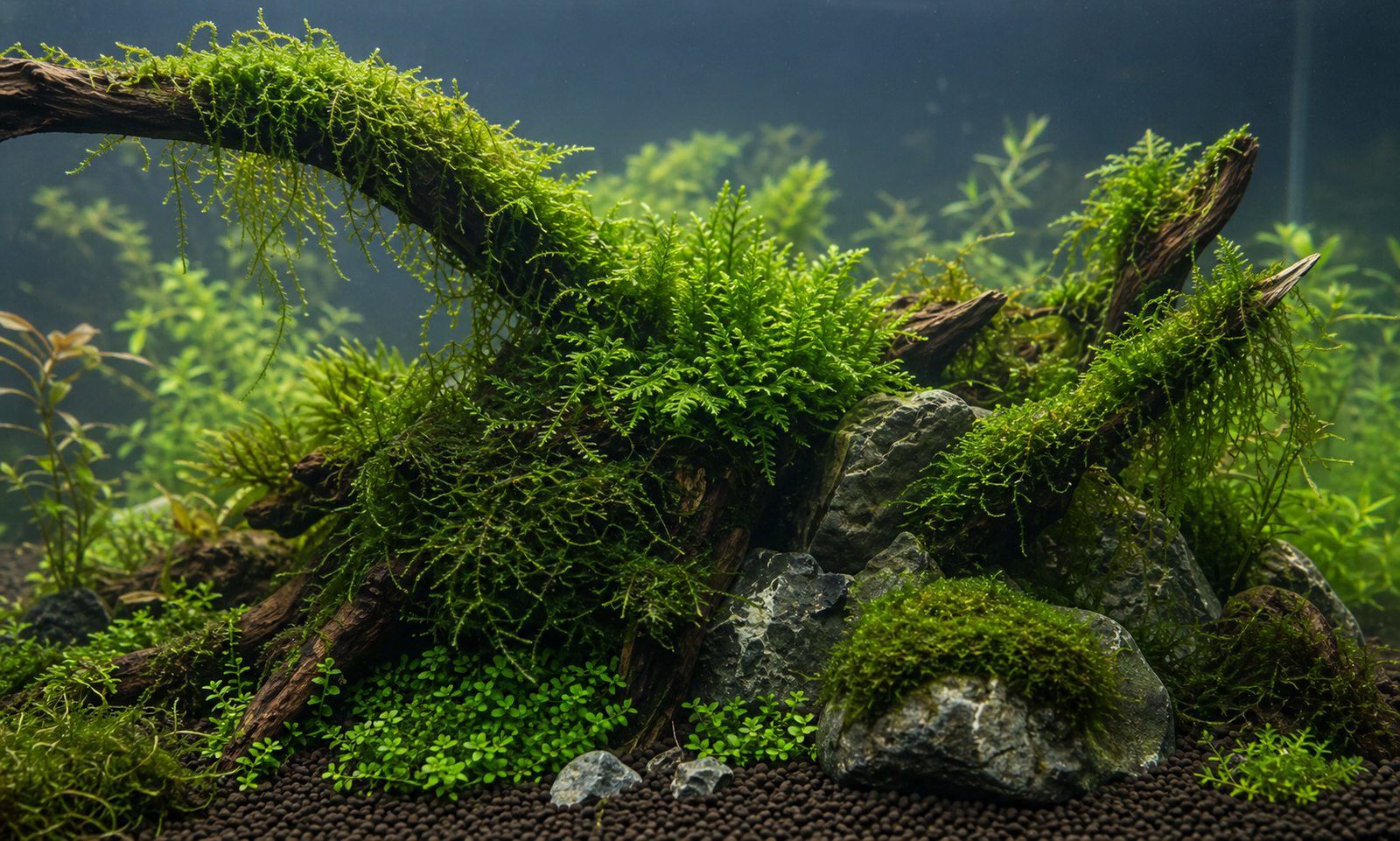
Aquarium moss is one of the easiest ways to make a freshwater tank look mature, natural, and full of life. It can be attached to driftwood, tucked between rocks, grown into carpets, or used as cover for shrimp and fry.
Most aquarium mosses are low-tech friendly, but they do not all grow the same way. Some grow wild and stringy, while others form neat triangular fronds, upright flames, or soft weeping curtains.
Quick Comparison of Aquarium Moss Types
Java Moss
Java moss is the classic beginner aquarium moss. It is hardy, adaptable, and tolerant of a wide range of water conditions. If you are new to planted tanks, this is usually the safest first moss to try.
It grows in a loose, irregular pattern and can look a little wild if left untrimmed. That makes it great for natural tanks, shrimp tanks, breeding tanks, and low-tech setups.
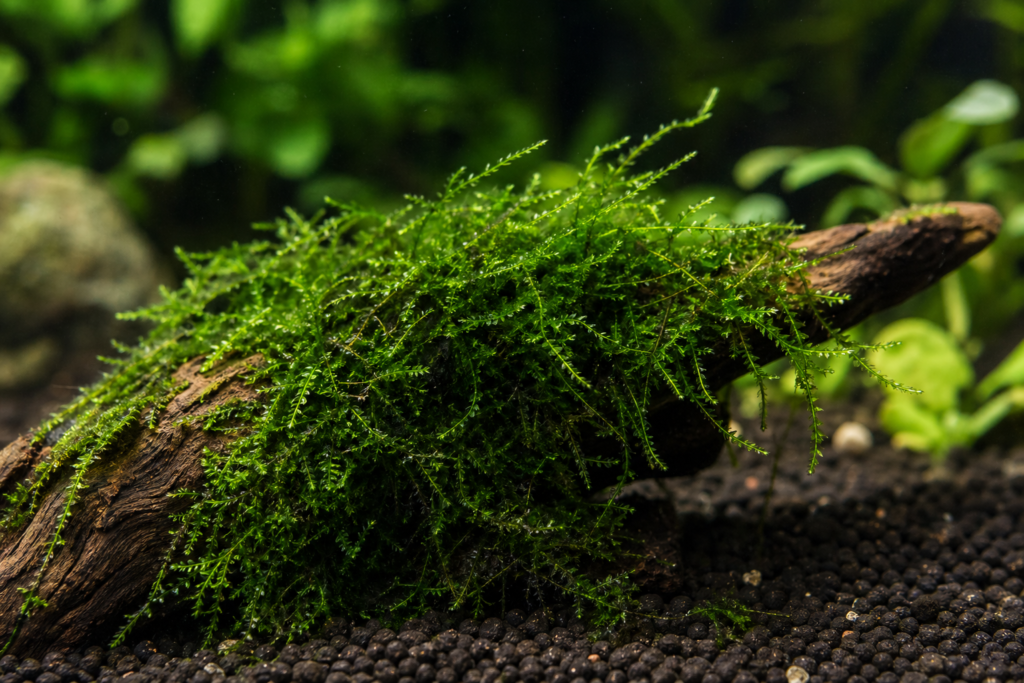
Best for: beginners, shrimp, fry cover, driftwood, low-light tanks.
Christmas Moss
Christmas moss has a more structured look than Java moss. Its fronds often grow in layered, triangular shapes that resemble tiny fir tree branches. This makes it a popular moss for aquascaping.
It usually looks cleaner and more intentional than Java moss, especially when attached to branches or rocks. It does best with decent flow and occasional trimming.
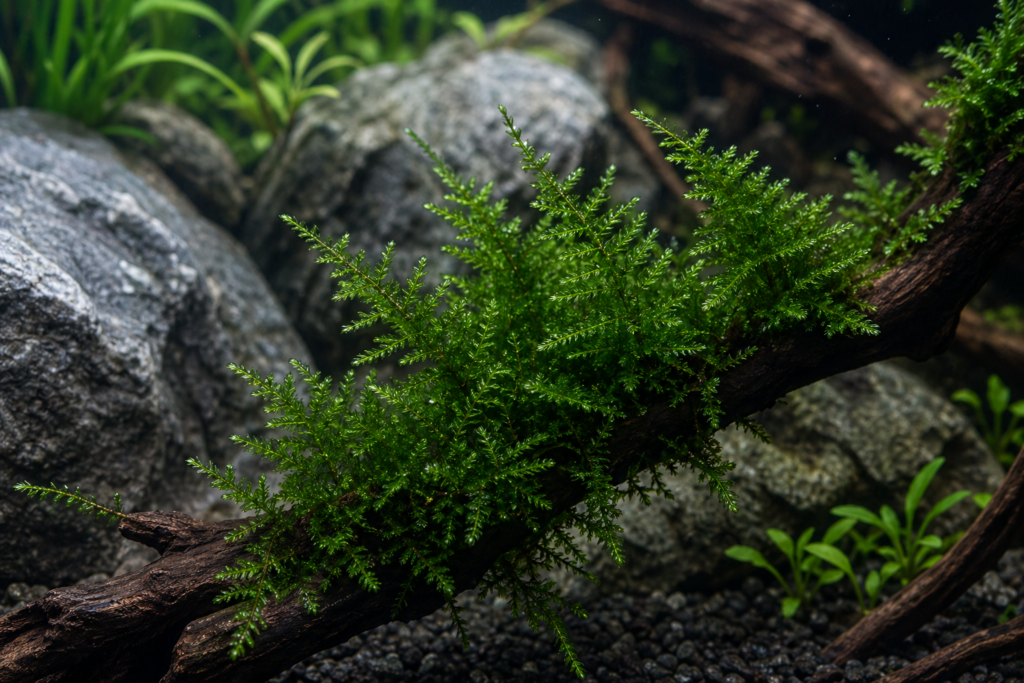
Best for: aquascapes, moss walls, driftwood branches, midground texture.
Flame Moss
Flame moss grows upward in twisting vertical shoots, which makes it very different from most aquarium mosses. Instead of spreading flat or hanging down, it creates an upright, flame-like effect.
This moss is useful when you want height and texture without using stem plants. It looks especially good attached to small rocks or placed around the base of hardscape.
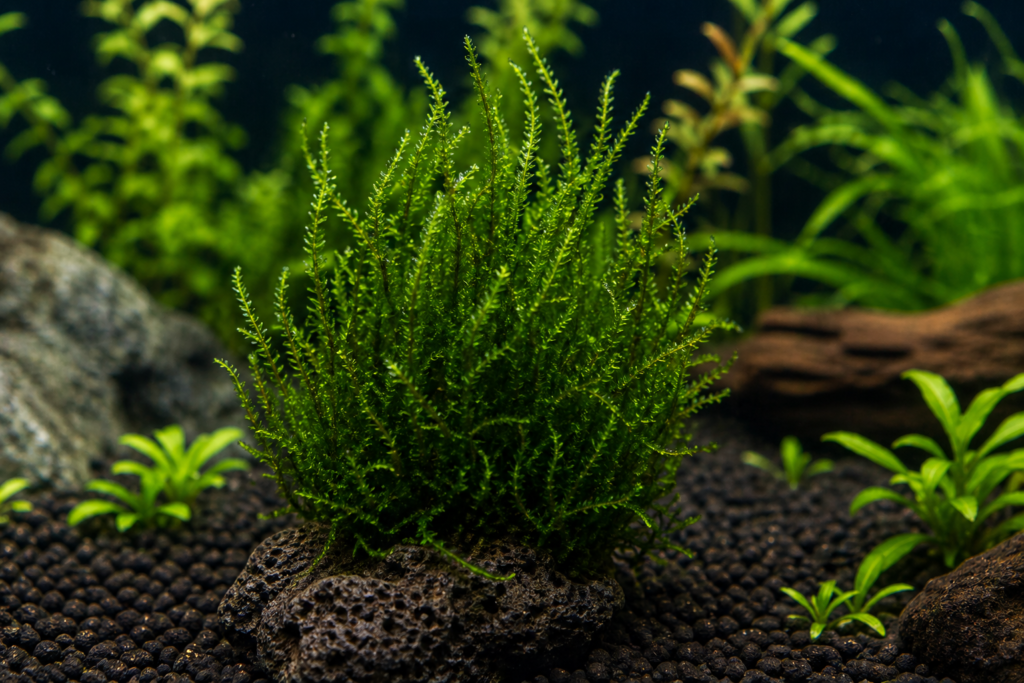
Best for: vertical accents, nano aquascapes, rock details, unusual texture.
Weeping Moss
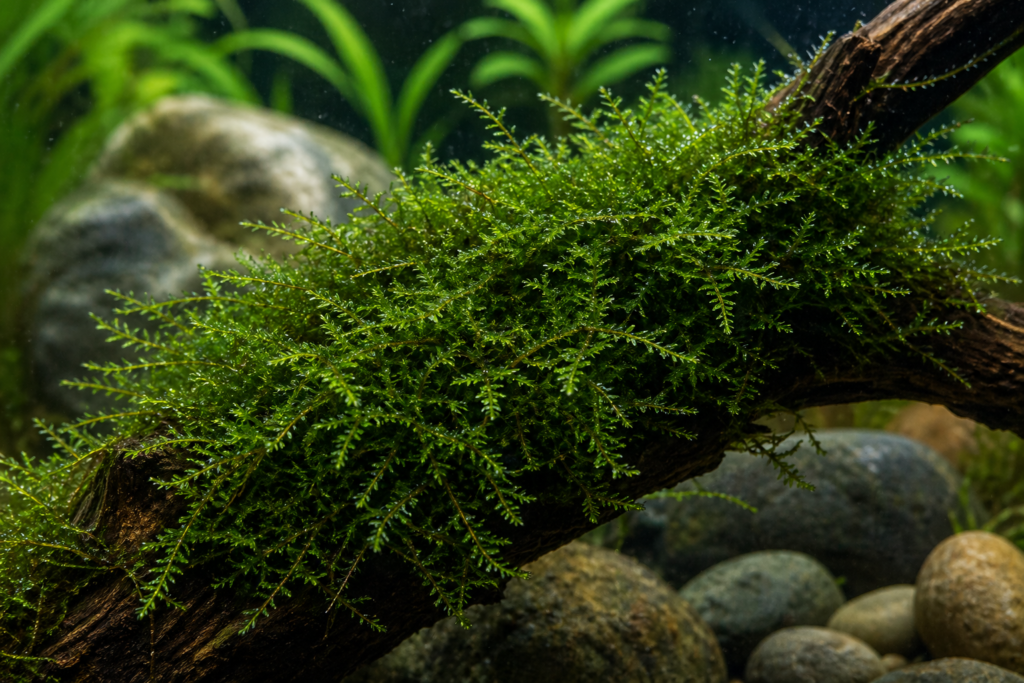
Weeping moss grows downward, creating soft hanging curtains from driftwood or rock ledges. It is one of the best mosses for creating an aged, forest-like aquascape.
It looks especially natural when attached to branching driftwood. Over time, it can create a draping effect that makes hardscape look older and more established.
Best for: driftwood canopies, overhangs, nature-style aquascapes.
Taiwan Moss
Taiwan moss has a soft, refined appearance. It is less chaotic than Java moss and can look more delicate in aquascapes. It is a good choice if you want a natural moss texture without the messier growth pattern of Java moss.
It does well attached to wood or stone and benefits from clean water, steady flow, and regular trimming.
Best for: refined aquascapes, driftwood, rock coverage, natural layouts.
Peacock Moss
Peacock moss grows in dense, soft fronds that can look fuller and more decorative than Java moss. Its growth can appear fan-like when healthy, making it useful for lush hardscape coverage.
It is a good middle-ground choice: more decorative than Java moss, but usually less demanding than very delicate mosses.
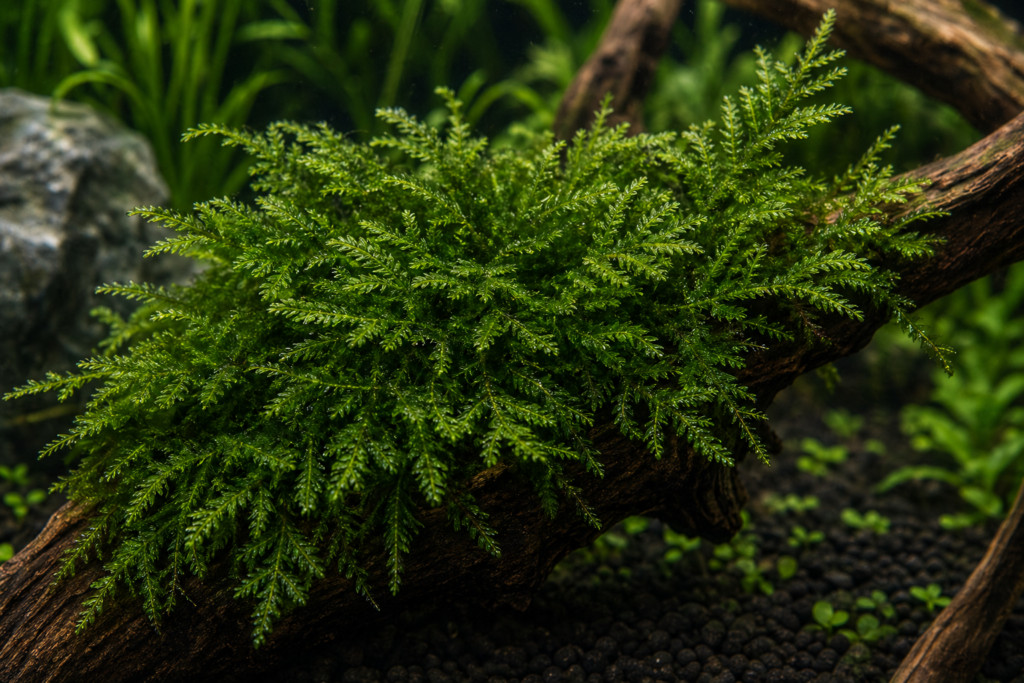
Best for: lush driftwood, rock accents, shrimp tanks, planted aquariums.
Fissidens Moss
Fissidens is prized for its tiny, feather-like fronds. It has a refined texture that works beautifully in nano tanks and high-detail aquascapes.
It grows more slowly than Java moss and usually costs more, but it creates a much neater and more premium look. It is excellent for small stones, foreground details, and shrimp tanks.
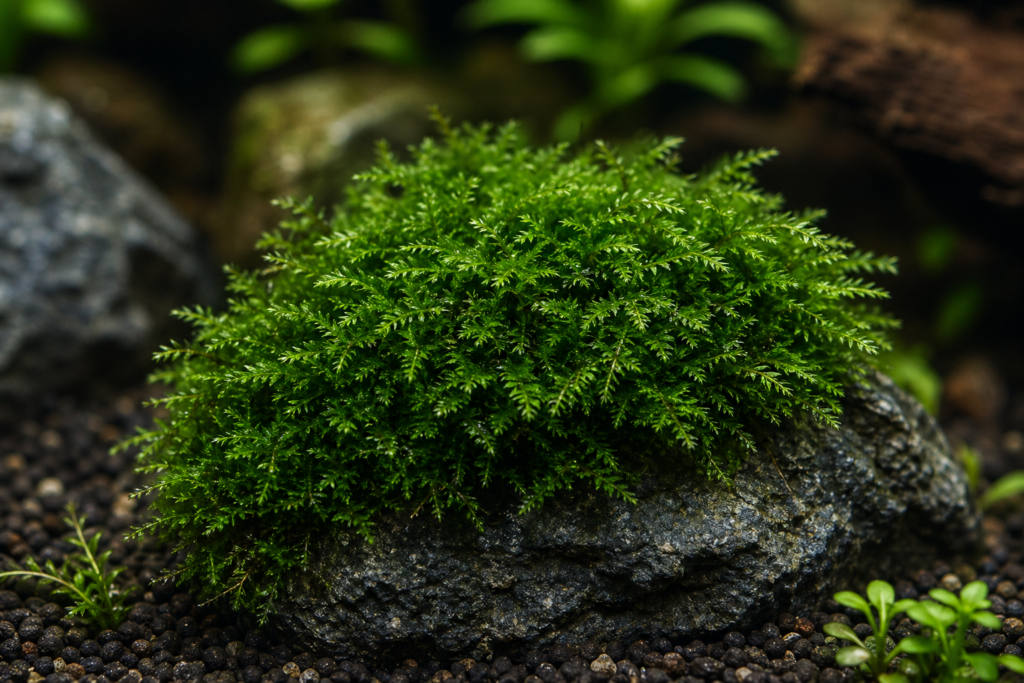
Best for: nano tanks, foreground stones, shrimp tanks, detailed aquascapes.
Riccardia
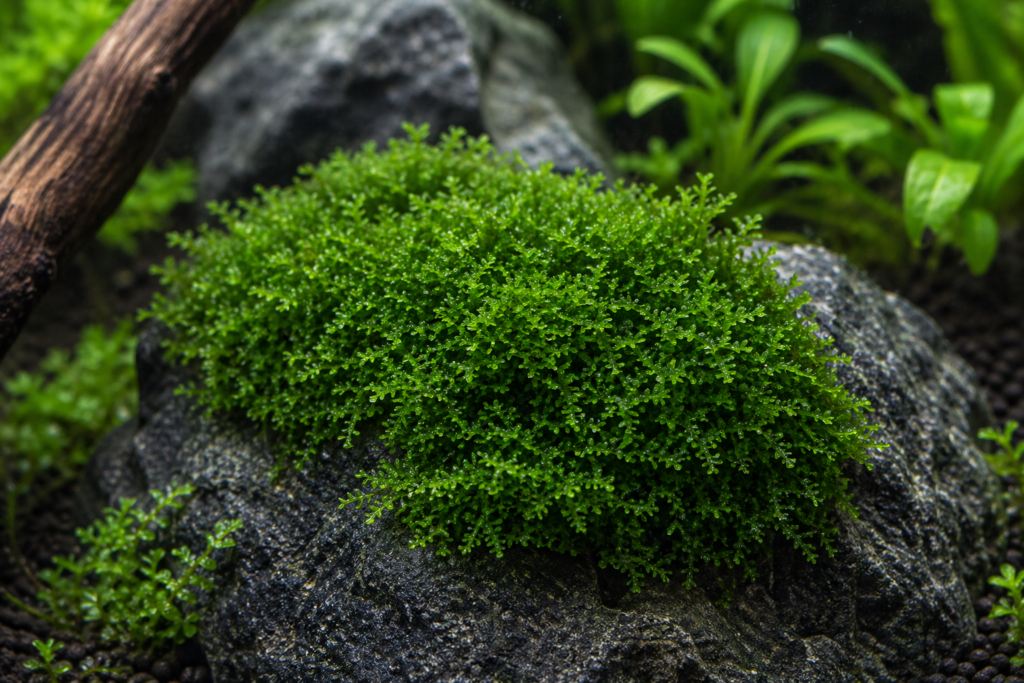
Riccardia, often sold as mini pellia, is technically a liverwort rather than a true moss, but aquarium hobbyists often use it the same way. It forms dense, compact cushions with a coral-like texture.
It can be stunning, but it is usually less forgiving than Java moss or Christmas moss. It does best in clean, stable tanks with good light and good circulation.
Best for: premium aquascapes, rock accents, high-detail planted tanks.
How to Attach Aquarium Moss
Most aquarium moss should be attached to hardscape rather than planted in substrate. Good options include:
- Aquarium-safe super glue gel
- Cotton thread
- Fishing line
- Stainless steel mesh
- Wedging small portions into driftwood cracks
Use small portions and spread the moss thinly. If you attach moss in thick clumps, the outer layer may grow while the bottom layer turns brown.
Best Aquarium Moss for Beginners
Java moss is the best beginner moss overall. It is hardy, affordable, easy to find, and tolerant of low-tech conditions.
Christmas moss is the best second choice if you want something more structured. It is still manageable for beginners, but it usually looks cleaner in aquascapes.
Best Aquarium Moss for Shrimp Tanks
Java moss, Christmas moss, Peacock moss, and Fissidens are all excellent for shrimp tanks. Moss gives shrimp a surface to graze on, collects biofilm, and provides hiding places for baby shrimp.
For budget shrimp tanks, choose Java moss. For a more polished nano shrimp tank, choose Fissidens or Christmas moss.
Best Moss for Driftwood
For driftwood, the best choices are:
- Java moss for a natural wild look
- Christmas moss for layered branch texture
- Weeping moss for hanging growth
- Peacock moss for lush coverage
If you want a tree-like aquascape, Christmas moss and Weeping moss are usually the strongest choices.
Final Verdict
If you want the easiest aquarium moss, choose Java moss.
If you want the best all-around aquascaping moss, choose Christmas moss.
If you want vertical texture, choose Flame moss.
If you want a hanging forest effect, choose Weeping moss.
If you want a premium nano-tank look, choose Fissidens or Riccardia.
For most planted aquariums, the best approach is to mix two or three moss types instead of relying on one. Java moss can fill natural areas, Christmas moss can define branches, and Fissidens or Riccardia can add detail to foreground stones.